Global platforms.
Language gaps.
Reputational risk.
Human-generated training datasets built by native-speaking domain experts so your models handle high-risk content accurately in your priority languages.
Low-resource languages break your guardrails
AI models trained predominantly on English and high-resource languages perform poorly when handling sensitive or contested content in languages like Marathi, French, and Indonesian. Even languages like Spanish or Arabic are high-resource in general, but low-resource on safety context. What your model gets right in English it gets wrong in the languages millions of your users actually speak.
Regional nuance cannot be scraped or synthesized
Languages do not just encode words; they encode religous perspectives, regional political contexts, and social norms that shift by dialect, geography and over time. Synthetic data generation and machine translation cannot produce this. Linguistic & translation firms do not capture that nuance. Without native-speaking, subject-matter domain experts, your training data reflects someone else's cultural assumptions, not your users' reality.
The cost of reputational and regulatory risk
One screenshot going viral is all it takes. A single culturally inappropriate or factually wrong AI response, captured and shared, can escalate into a reputational crisis before your team has had a chance to triage it. Damage to your reputational capital can cost you billions. Additionally, big tech is under scrutiny from both sides of the aisle in the US congress, as well as the EU. The cost of prevention is a fraction of the cost of recovery.
Expert-curated datasets for the languages models typically underserve
We produce human-generated, culturally grounded prompt-response datasets built by native-speaking experts with subject-matter fluency in high-risk, contested, and politically sensitive topics. Our datasets are designed for AI safety fine-tuning, giving your models the training signal they need to handle sensitive content accurately, neutrally, and with the cultural competence your global users require.
Who We Serve
Teams building or operating AI systems that generate, moderate or evaluate content across platforms with large user bases — including Platform Integrity, Responsible AI, AI Policy, and Applied Research functions.
400+ languages & dialects
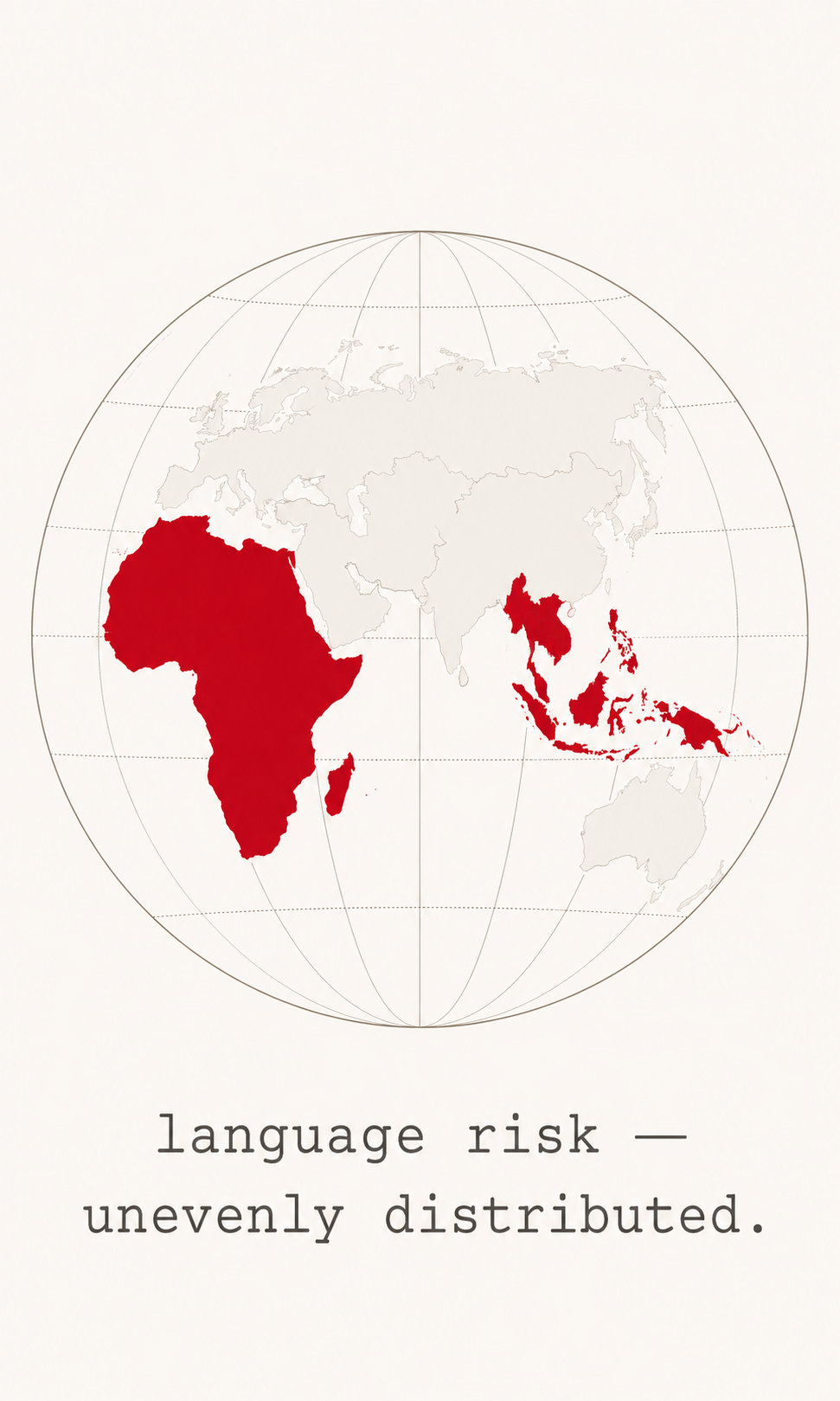
We work across a broad range of low-resource and safety-critical languages, from from South Asian and Southeast Asian contexts to African languages, regional Arabic dialects, and languages where safety data is scarce despite large speaker populations. Spanish, for example, is not low-resource in general, but it is low-resource in safety data.
Explore the languages
Select a region above to explore languages by country
Don't see your language? We source experts across a wider set of languages and geographies. Get in touch.
Human-Generated Golden Datasets
for AI Safety Fine-Tuning
The Problem: A Global LLM with Local Blind Spots
One of the world's largest consumer technology companies, with hundreds of millions of active users across dozens of markets, had challenges with a recently launched large language model. The technical capabilities of the model were not the issue. The risk was more specific: when users asked the model high-risk topic questions in lower-resource languages, the model was more likely to produce factually wrong, culturally inappropriate, or one-sided responses. In higher-resource languages and familiar contexts, the model performed well. However, in Bengali, Indonesian, or even in Spanish or Arabic, it struggled in ways that were both unpredictable and hard to detect without native speaker or subject-matter expert knowledge.
12,000+
Prompt-response pairs delivered
14
Priority languages and regions covered
12 weeks
End-to-end delivery timeline
See a sample dataset
Select the language, geography, and topic category that matches your use case. Leave your contact details and we will send you a representative set of prompt-response pairs from our existing dataset library so you can evaluate quality, tone, and coverage before committing to a project.
Seven steps. No shortcuts.
Every dataset we deliver is the product of a rigorous, expert-driven pipeline designed to balance cultural fidelity, factual accuracy, and iterative quality control.
Use Case Scoping
We work with your team to define geographic coverage, target languages and dialects, high-risk topic categories relevant to your platform, and the specific model behavior you are trying to improve. Nothing is generic.
Data Spec and Prompt-Response Design
We design the structure of the dataset; the types of prompts, the response formats, the tone and neutrality framework. This, in direct collaboration with your team. This spec becomes the contract that every expert contributor works from.
Expert Sourcing and Team Formation
We source native-speaking experts with verified domain credentials from academic, legal, civil society, or policy backgrounds, and we match them to the specific topic and regional context of your dataset. This is not crowdsourced annotation. These are pre-vetted people in our network who understand the subject matter.
Sample Calibration
Before full-scale production, we run a focused calibration phase with a sample batch. This aligns contributors, QA leads, and your team on tone expectations, factual standards, and risk thresholds before we scale. It is where issues are caught and fixed before they become costly.
Full Dataset Generation
With calibration complete and expectations aligned, our expert teams produce the full dataset at scale. Each prompt-response pair is written to reflect real user inputs, regional discourse, and platform policy environments.
Iterative QA and Adversarial Review
Every dataset undergoes multi-stage quality review including adversarial testing, tone drift detection, factual spot-checks, and escalation path validation. QA leads are embedded in the same cultural and linguistic context as the contributors.
Real-Time Context Monitoring
For ongoing engagements, we monitor for shifts in regional discourse, emerging topics, and regulatory changes that may affect dataset relevance or model behavior. Datasets are not static deliverables but are living assets.
Human-Generated Datasets for AI Safety Fine-Tuning White Paper
Navigating High-Risk Topics with Accuracy, Neutrality, and Cultural Competence in Global Markets
Our white paper documents the methodology behind our process, the specific limitations of synthetic data approaches for safety fine-tuning, and the implementation results we have seen across diverse multilingual markets. Written by Alisar Mustafa and Cherry Wu.
By submitting this form you agree to be contacted by Duco regarding localized dataset services. We will not share your details with third parties.
A Deepdive Into Our Process
Technical limitations of synthetic data approaches
Seven-stage methodology for expert-curated datasets
Implementation results across diverse markets
Framework for scalable AI safety infrastructure
Let's discuss your dataset needs
If you have a specific language, platform, or topic in mind, or if you are trying to understand whether human-generated data is the right approach for your safety infrastructure, book time with our team directly.
What to expect on the call
A brief review of your platform, priority languages, and high-risk topic areas
An assessment of whether human-generated data is the right fit for your use case
A overview of our scoping and delivery process, and timelines
No commitment required, the goal is to inform